


From November 14 to 15, Prof. Niu Lizhi, President of Guangzhou Fuda Cancer Hospital, attended an academic conference on tumor ablation in Italy as a keynote speaker at the invitation of renowned Italian ablation specialist Dr. Luciano Tarantino. The event brought together leading figures in the field, including Prof. Tito Livraghi, an international pioneer in minimally invasive liver tumor ablation, and Prof. Luigi Solbiati, a pioneer in minimally invasive thyroid therapy. Sharing the stage with these global authorities underscored both the high caliber of the conference and the international standing of Chinese specialists.
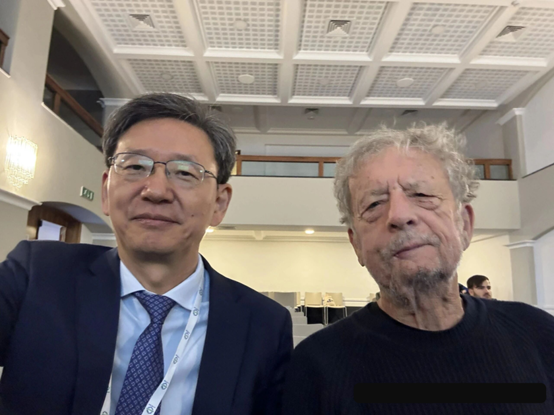
· Prof. Tito Livraghi: An international pioneer in minimally invasive liver tumor ablation who established the standard protocol for ultrasound-guided percutaneous ethanol injection (PEI) for liver cancer, advanced the clinical application of radiofrequency ablation (RFA) in early-stage hepatocellular carcinoma, and served as editor-in-chief of the foundational textbook Tumor Ablation: Principles and Practice.
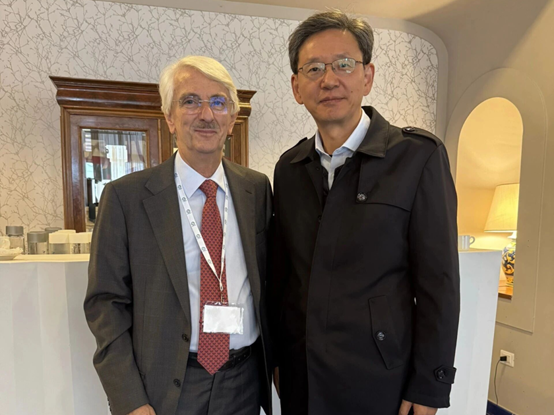
· Prof. Luigi Solbiati: A pioneer in minimally invasive thyroid treatment who has driven the standardization of tumor ablation therapies, expanded clinical indications, and spearheaded advancements in robotic and navigation technologies.
Focusing on interventional ultrasound in hepatobiliary and pancreatic oncology, the conference highlighted ultrasound-guided minimally invasive procedures for the diagnosis and treatment of liver, biliary, and pancreatic tumors. During the session, President Niu delivered a keynote address titled “Cryoablation for Liver Cancer,” sharing China's clinical experience and future outlook in the field with international peers.
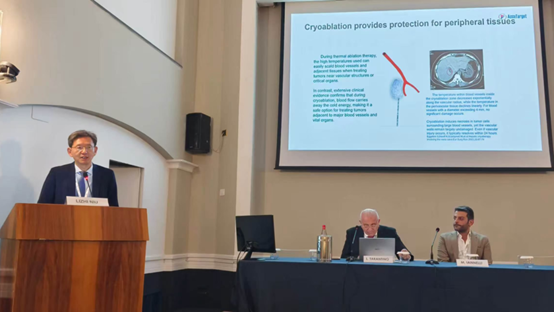
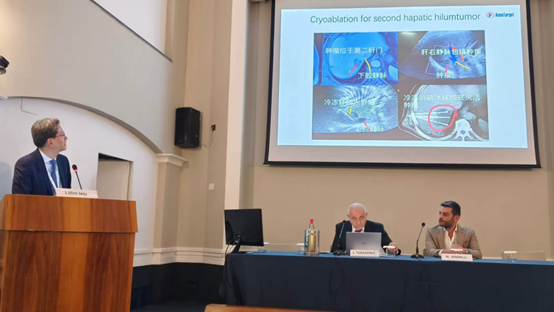
In his presentation, President Niu compared the characteristics of thermal and cryoablation modalities. Traditional thermal ablation generates high temperatures that can easily damage adjacent blood vessels or vital structures, posing significant challenges when treating tumors near major vasculature or critical organs. In contrast, extensive clinical evidence demonstrates that cryoablation offers a distinct safety advantage: blood flow carries away cold energy—known as the heat-sink effect—making cryoablation a preferred, safe treatment option for tumors located near major blood vessels and vital organs.
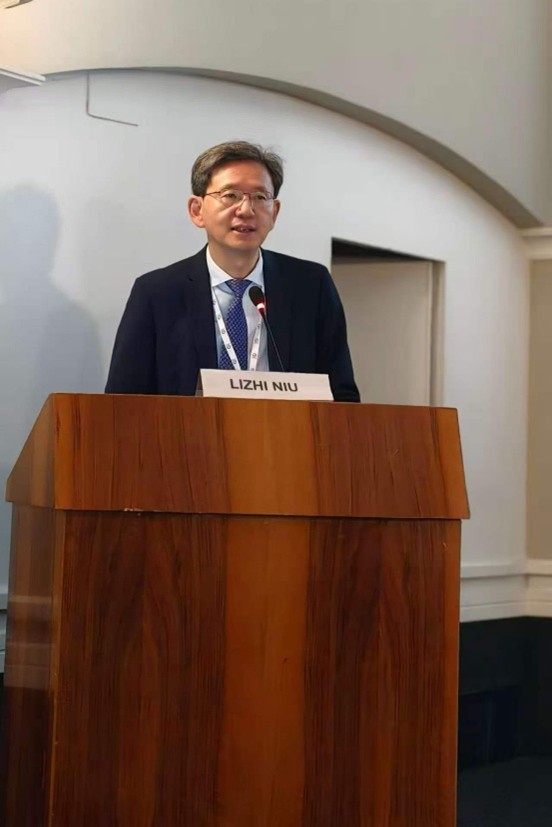
Drawing on real-world clinical cases, President Niu highlighted cryoablation strategies for tumors in high-risk anatomical locations, such as the hepatic hilum and lesions encased by blood vessels. His presentation sparked strong interest among attendees, generating lively discussion and an active Q&A session.
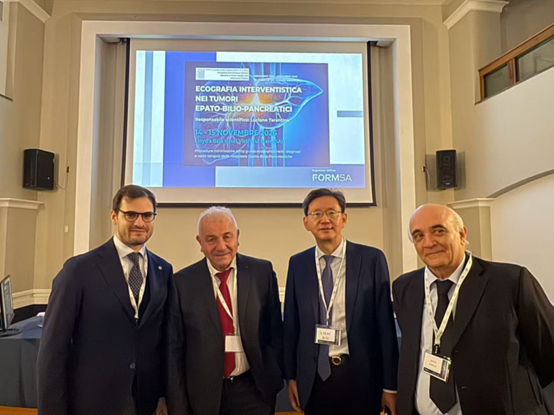
Photo Caption: President Niu Lizhi exchanging insights and posing for a group photo with internationally renowned ablation experts. |
The trip to Italy served not only as a valuable opportunity to learn from global leaders in ablation, but also as a platform to showcase China's clinical strength in liver cancer cryoablation on the international stage. As a National Clinical Key Specialty (Oncology) hospital, Guangzhou Fuda Cancer Hospital places strong emphasis on academic development and international exchange. Moving forward, the hospital will continue its "going global and bringing in" strategy to advance the high-quality development of minimally invasive ablation, integrating international best practices with its specialized clinical expertise to benefit more cancer patients worldwide.