


"Oh my God! Do we have to go through all that torment all over again?"
This was the very first thought that flashed through the mind of Xiao Jiang, a Malaysian Chinese, when she learned about her father's lung cancer diagnosis. A few years ago, her mother passed away from lung cancer. The painful four-year struggle during that treatment remains an indelible shadow in the family's heart. When misfortune seemed to knock on their door again, Xiao Jiang's deep worry was understandable.
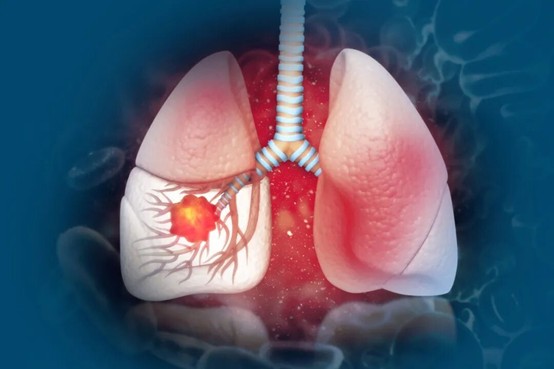
Xiao Jiang's family works in the catering industry. Two years ago, her father began experiencing symptoms like coughing with blood streaks, shortness of breath, and chest tightness. He couldn't even keep up with older people while walking and panted heavily whenever he walked uphill. Realizing something might be wrong with his body, he went to a local hospital for a check-up. The result came like a bolt from the blue: a space-occupying lesion in the anterior segment of the right lung lobe, abnormal band-like density in the right lung hilar region accompanied by bronchial obstruction; a biopsy confirmed right lung squamous cell carcinoma. A whole-body PET-CT scan further showed metastasis in the mediastinum and supra/infraclavicular lymph nodes on the right side, along with suspicious metastasis in the distal right femur.
The genetic testing results were initially disappointing—no actionable mutations for targeted therapy were detected. Fortunately, her father had high expression of PD-L1 (TPS=60%), which meant he could benefit from immunotherapy.
At that time, a friend of her father suggested seeking medical care at Guangzhou Fuda Cancer Hospital in China. The friend's daughter had once been deemed "untreatable" locally, but was ultimately given a new lease on life at Fuda and is now able to travel around. However, considering the travel hassle of seeking treatment overseas, her father chose to undergo 14 courses of immunotherapy locally.
"The treatment was effective at first, but later it stopped working," Xiao Jiang recalled. In mid-April 2025, a re-examination indicated that the tumor in the right lung had enlarged to about 10.5 cm, encasing the pulmonary vessels, while the enlargement of the mediastinal lymph nodes had also worsened. Local doctors informed them that chemotherapy was the only option left, and the efficacy might not be ideal. Remembering the pain her mother endured during treatment, her father felt thoroughly discouraged: "If the outcome is going to be the same, I'd rather not seek treatment anymore."
However, hope often waits just around the corner.
Recalling the successful experience of that friend's daughter, Xiao Jiang and her father decided to travel to Guangzhou and come to Fuda Cancer Hospital. They learned that Fuda offers not only interventional intra-arterial infusion chemotherapy—which delivers drugs directly to the tumor's blood supply arteries to minimize toxic side effects—but also cryoablation, a minimally invasive procedure that requires no major surgery. These diverse options gave them the confidence to choose anew.
In May 2025, Xiao Jiang accompanied her father to set foot in Fuda for the first time. Admission checks showed that besides the enlarged lung and mediastinal lesions, brain metastases had also developed, causing blurry vision. Facing her father's complex condition, the hospital activated a Multidisciplinary Team (MDT) consultation. Attending physician Dr. Li Na tailored a comprehensive treatment plan for him:
For brain metastases: Gamma Knife therapy was used;
For lung and mediastinal lesions: Interventional intra-arterial infusion chemotherapy was performed to target the core of the lesions directly;
Systemic therapy: The immunotherapy drug was switched to achieve a powerful synergy between local and systemic treatments.
After several courses of treatment, the lung lesions and lymph nodes gradually shrank, and lesion activity was significantly reduced; imaging scans showed no obvious brain metastasis, nor clear systemic metastasis; the tumor marker Cytokeratin 19 fragment (CYFRA21-1)—a crucial monitoring index for lung squamous cell carcinoma—steadily dropped to normal levels.
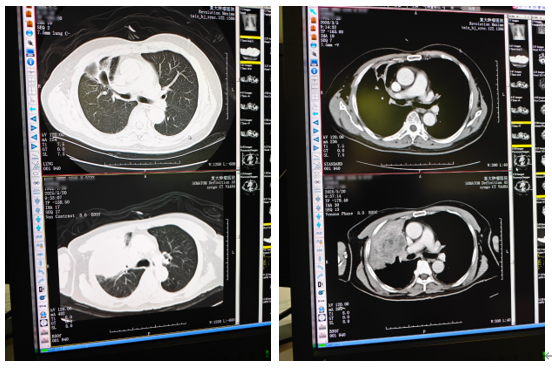
"For the past two years, my dad has been living like a normal person," Xiao Jiang said, unable to conceal her excitement. Compared to her mother's painful experience back then, her father's treatment journey was worlds apart—no severe side effects, good recovery, and guaranteed quality of life.
Having both parents suffer from lung cancer also made Xiao Jiang highly vigilant. She proactively underwent genetic testing herself, and thankfully, the results showed no abnormalities. She reflected that kitchen oil fumes might have been an important trigger. Her parents had worked in the catering industry for decades, and her mother had labored in oil-fume-filled environments for a long time. Scientific research has also confirmed that cooking oil fumes can cause DNA damage or carcinogenesis, serving as a major risk factor for lung cancer in non-smoking women.
In this long battle, her father also made positive personal changes—quitting smoking ten years ago, adjusting his mindset, eating a balanced diet, and ensuring adequate sleep. These seemingly ordinary lifestyle details became solid pillars supporting his treatment's success.
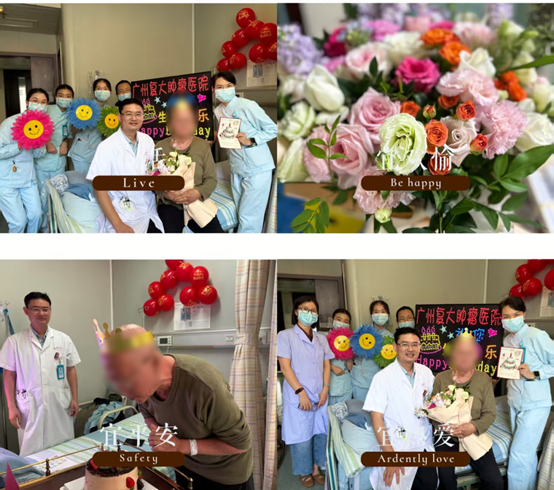
Speaking of Fuda, Xiao Jiang was filled with gratitude: "The medical equipment here is advanced, the treatment response is lightning-fast, and the medical care is meticulous. Any specialized issues can be resolved promptly." In her eyes, medical care that combines professionalism with warmth is the true "ark of life" patients need.
