- Login ▪ Register
- Message
- Add to favorite
- Website Map
- Select Language
- English
- العربية
- Русский
- India
- Indonesia
- Malay
- Tiếng Việt
- ประเทศไทย
- Hungarian
- Romanian
- Dansk
- 繁體中文
- 简体中文


Guangzhou Fuda Cancer Hospital Philippines Consultation Center(The hospital is located in China)
For cancer patients who are unable to undergo surgery—whether due to advanced age, extensive metastatic spread, or excessively high surgical risks—cryoablation therapy represents an ideal treatment option. Compared to surgery, chemotherapy, and radiotherapy, cryotherapy offers the advantages of faster recovery and shorter treatment durations; furthermore, it helps slow the metastasis of cancer cells and avoids the common side effects associated with chemotherapy and radiotherapy, such as vomiting, nausea, or other adverse reactions.
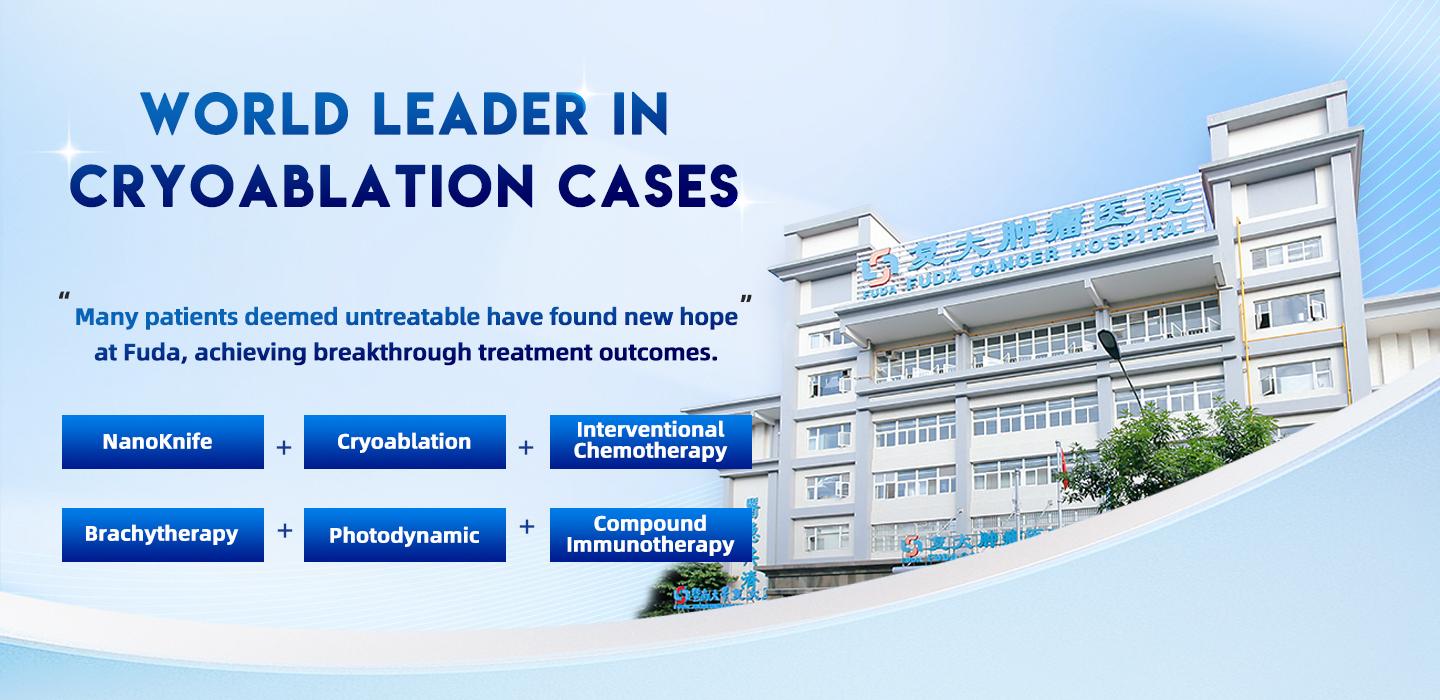
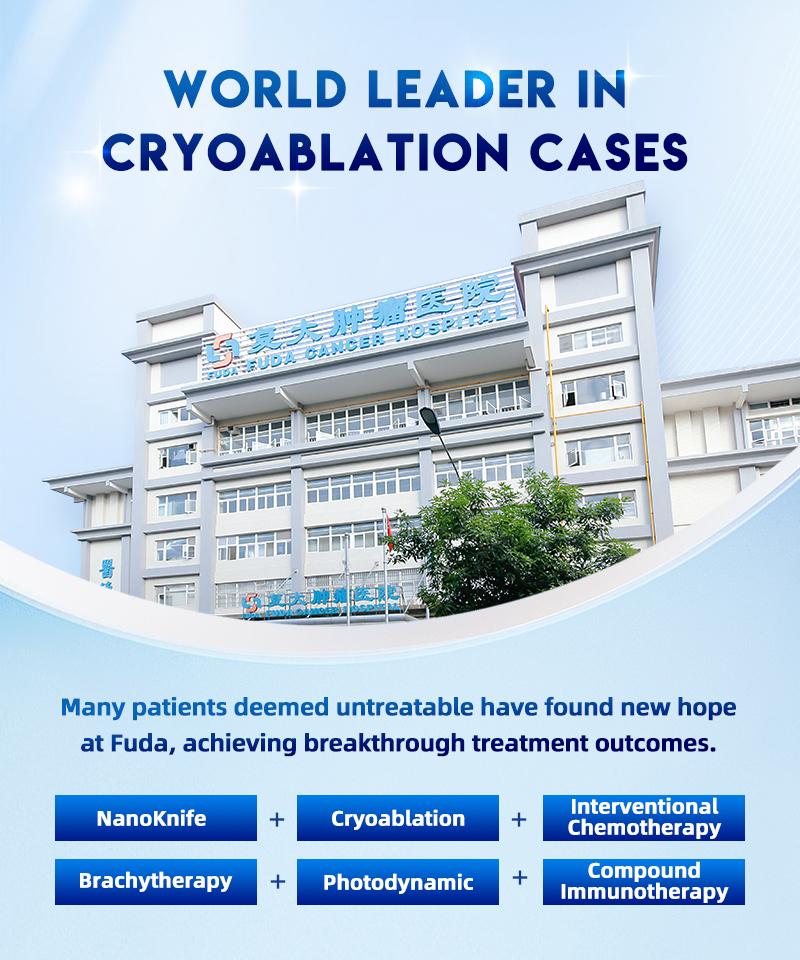
Located in China, Fuda Cancer Hospital Guangzhou stands as one of the global pioneers in the field of minimally invasive oncology treatment. The hospital is dedicated to utilizing minimally invasive therapies—rather than traditional open surgery, radiotherapy, or chemotherapy—to treat tumors. Currently, the hospital ranks first globally in terms of the volume of cryoablation and NanoKnife ablation procedures performed, employing these advanced technologies to treat a wide variety of tumor types.
Distinctive therapy
 CSA (Cryosurgery Therapy)
 IRE (Irreversible Electroporation)
 CMI (Cancer Microsphere intervention)
 CIC (Combined Immunotherapy for Cancer)
 Brachytherapy
 (PDT) Photodynamic therapy
CSA (Cryosurgery Therapy)
Indications: breast cancer, liver cancer, lung cancer, prostate cancer, ovarian cancer, etc.
Advantages: A cryoprobe can rapidly cool cancerous tissue to below -160°C, followed by a rise in temperature; this process dehydrates the cancer cells and destroys the tumor's small blood vessels, thereby causing the tumor cells to die. More details
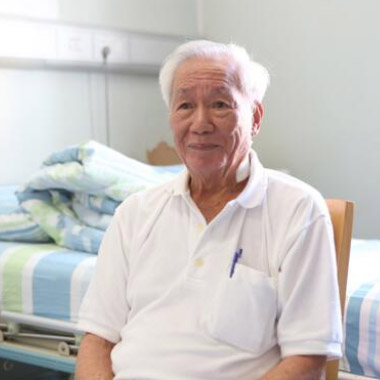
Living with cancer for 8 years, he becomes “Super Brain” at the age of 84
In 2010, 76-year-old Mr. Han was told that he…
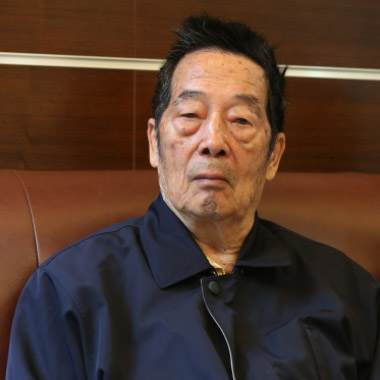
5 years later, an 81-year-old Thai patient with advanced lung cancer is still here with us
In 2013, Mr. Lin was diagnosed with lung cancer. Then doctors there recommended an open…
IRE (Irreversible Electroporation)
Indications: pancreatic cancer, liver cancer, renal cancer, prostate cancer, gallbladder cancer, cholangiocarcinoma, etc.
Advantages: Irreversible electroporation is also called nano-knife ablation. It can accurately induce tumor cell apoptosis and completely ablate the tumor without irreversible damage to other important tissues in the ablation zone, such as blood vessels, bile ducts, nerves, etc., so that it can reduce complications caused by other traditional ablation methods. More details

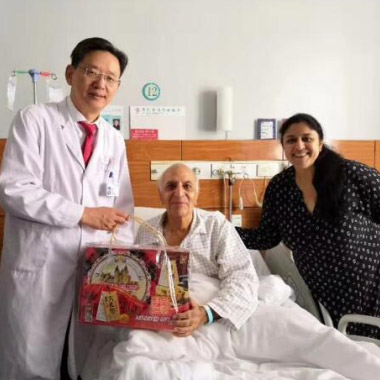
Want to consult with our experts and let the experts give the most suitable treatment plan for the patient? Please fill out the appointment form and contact us immediately.
CMI (Cancer Microsphere intervention)
Indications: breast cancer, intestinal cancer, stomach cancer, esophageal cancer, liver cancer, lung cancer, head and neck tumor, lymphatic cancer, etc.
Advantages: Various chemotherapy drugs are mixed into nano-sized or micron-sized particles by a special process, and then injected into the tumor blood-supplying artery by an interventional method, which can not only increase drug concentration in targeted area, but also reduce drug dose and side effects. More details


CIC (Combined Immunotherapy for Cancer)
Indications: liver cancer, lung cancer, breast cancer, stomach cancer, throat cancer, esophageal cancer, lymphatic cancer, oral cancer, etc.
Advantages: Organic combination of various immunotherapies can significantly prolong the survival period of patients with progressive or metastatic cancer and prevent or reduce recurrence. The recurrence rate after surgery is reduced by 50% and half of patients with advanced tumors survived 10 to 15 years or even longer after treatment. More details

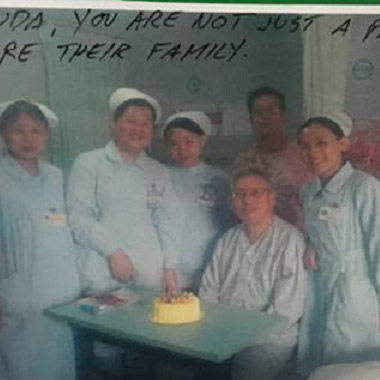
Brachytherapy
Indications: nasopharyngeal cancer, cervical cancer, prostate cancer, sarcoma, breast cancer, thyroid cancer, etc.
Advantages: It commonly uses 125 iodine seeds which have a half-life period of 59 days and release a short-course of gamma ray. The seeds implanted into cancerous masses radiate to destroy targeted cells, preventing unnecessary exposure of the whole body to radiation. More details


(PDT) Photodynamic therapy
Indications: esophageal cancer, oral cancer, colorectal cancer, bile duct cancer, gastric cancer, ampullary cancer, abdominal cancer, etc.
Advantages: PDT is a non-thermal light chemical reaction and requires oxygen, photosensitive substance (photo-sensitizer) and laser simultaneously. The photo-sensitizer is absorbed by neoplasm tissue and accumulates in the cells for a long time. The photo-sensitizer is activated with the appropriate wavelength of light. This leads to apoptosis of cancer. PDT is more accurate and effective with fewer side effects. More details

Anti-cancer treatment
-
conventional therapies
Surgery, radiotherapy, chemotherapy, targeted therapy, radiofrequency ablation, chemical ablation, radioactive stent, traditional Chinese medicine, China medicine, percutaneous ethanol injection, anti-angiogenesis

-
Minimally Invasive therapies
Irreversible electroporation (Nano-knife), cryosurgery therapy, vascular interventional therapy, microsphere interventional therapy, brachytherapy, photodynamic therapy, combined immunotherapy, microwave ablation, microwave hyperthermia treatment, ozone therapy


9TV Philippines: Medical Monday: FUDA Offers Hope To Terminally-Ill Cancer Patients
Therapy introduction video
FUDA Introduction
Since its establishment, Fuda Cancer Hospital has treated patients from more than 100 countries, including more than 10,000 patients from Southeast Asia, and is deeply trusted by cancer patients around the world.
Want to consult with our experts and let the experts give the most suitable treatment plan for the patient? Please fill out the appointment form and contact us immediately.